UniswapV2 Multichain TVL Aggregator Challenge
Context
Develop a system to aggregate and report Total Value Locked (TVL) from UniswapV2 pools across multiple blockchains. This project aims to create a robust, efficient, and scalable solution for TVL tracking in decentralized finance (DeFi) ecosystems.
Goals
- Create a monorepo-based application for multichain TVL aggregation. Just the API, no frontend needed
- Implement efficient data fetching using virtual batching and multicall techniques
- Develop a flexible and extensible architecture for future enhancements
- Ensure high test coverage and deployment readiness
- Get a grasp on the tech and tools we commonly use
Starting point: Tech design
Given the starter UML diagram provided, work on a brief tech design for the challenge.
Tech design must address:
- Which is the plan?
- 1 Sequence diagram (include diff contracts)
- 1 UML (relationship between missing modules)
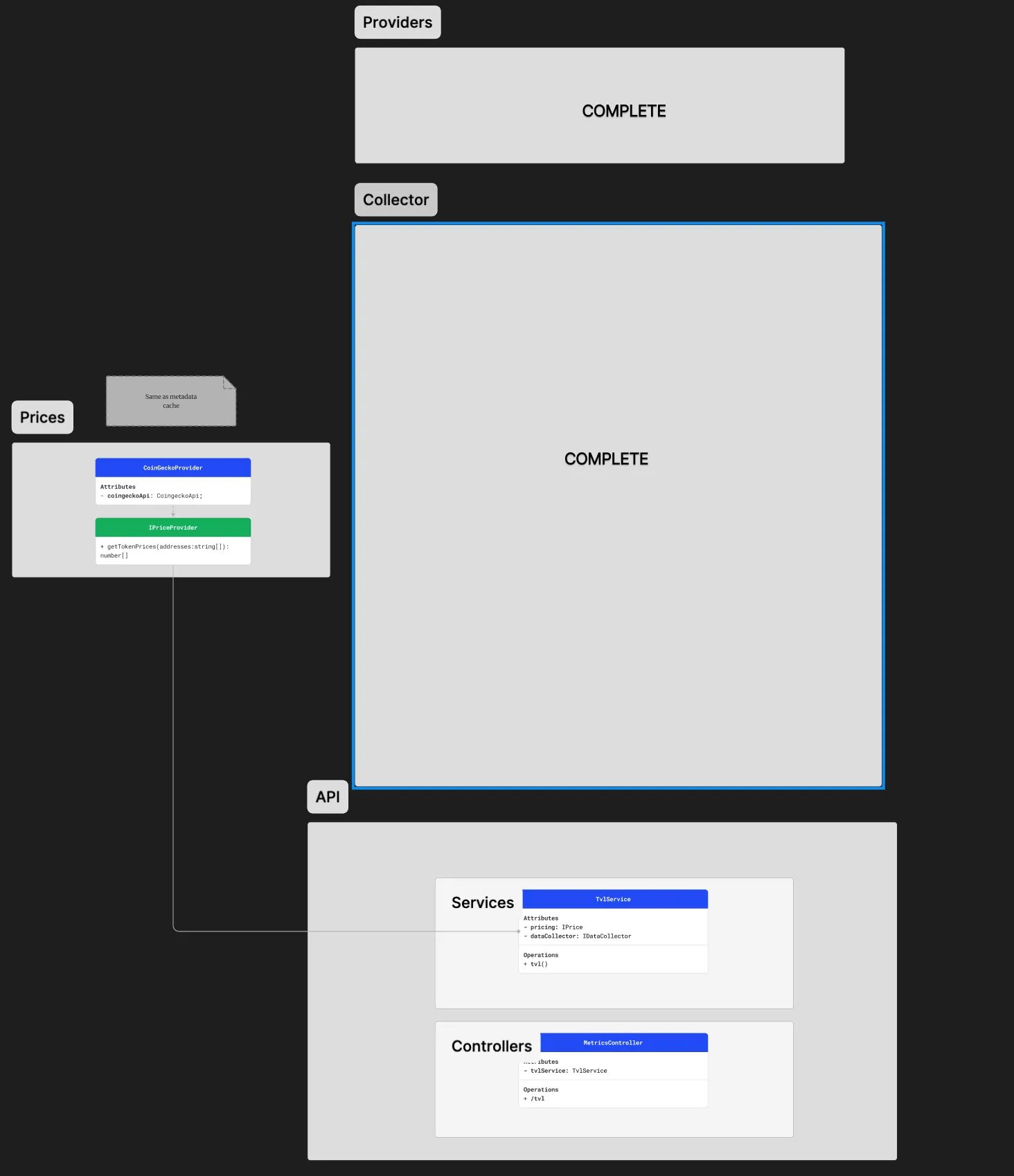
Coding fun
Create the challenge repo using the Wonder's Repo Creator and the Offchain-Turborepo-Boilerplate template. Give it a meaningful name 🙂
Must-do Components
- Monorepo Structure:
- Utilize monorepo template
- Pricing Module:
- Fetch prices from Coingecko and DeFiLlama
- Implement factory pattern for provider selection
- Add caching with 60-second TTL
- Logger:
- Implement using singleton pattern
- EVM Provider:
- Implement
readContractmethod - Utilize
Viemas the blockchain interfacing client (we ❤️ viem)
- Implement
- Batching System:
- Develop a batching contract for fetching TVL from different pools of Uniswap using token addresses as inputs
- Use
Foundryfor smart contract development- Note: don't need to become an expert on SC development
- Extend EVM Provider with
readBatchContractand test your contract implementation
- TVL Provider:
- Support multiple chains
- Implement proxy pattern for caching (
TVLProviderWithCache)
- API:
- Create a single GET endpoint:
/tvl - Implement the controller and services with dependency injection
- Return TVL for specified chains based on the request body
- Implement environment variable validation for all apps
- Swagger docs
- Create a single GET endpoint:
- Testing (this should be done along the way):
- Use
Vitestfor testing framework - Achieve a minimum 90% code coverage
- Use
- Deployment:
- Provide Dockerfile for local API deployment
Criteria
- Code design and modularity
- Tests, tests and tests!
- Proper building process
- Consider error handling
- Documentation, how can I use each library?
- Clean project structure and DRY
Next steps
Write some notes on your experience working on the challenge. All feedback is welcome and appreciated, as it helps us improve the challenge for the future.